
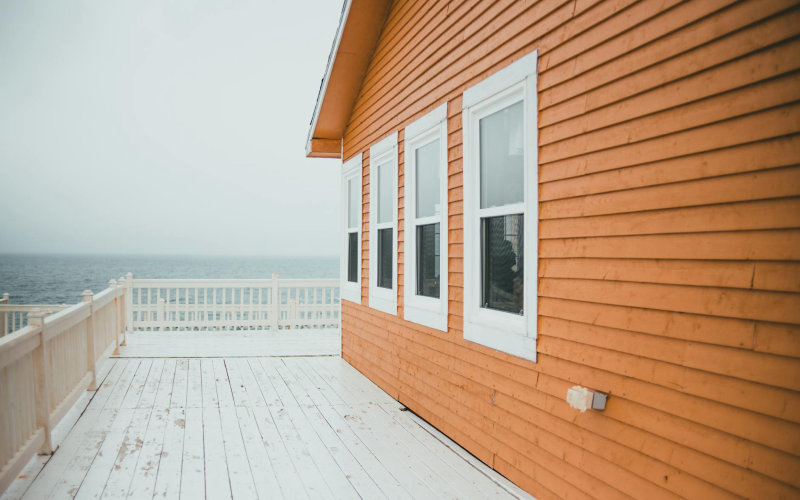

I ruined a deck once. Spent an entire Saturday staining it, stood back feeling genuinely proud — and by October the whole thing was peeling like a bad sunburn. That was 2011, and I’ve been obsessed with figuring out what went wrong ever since.
Here’s the thing: most deck staining mistakes that cause peeling aren’t really about the stain itself. The product usually isn’t the problem. You could buy the most expensive semi-transparent stain on the market and still end up with a flaking disaster if you skip a few fundamentals that pros treat as completely non-negotiable.
So I tracked down three deck contractors, spent about six months testing different prep methods on my own property, and what I found was pretty humbling. Almost every failure traces back to the same handful of avoidable errors.
1. Staining Over Dirty or Contaminated Wood
This one kills more deck jobs than anything else. Full stop.
Wood is porous. Stain needs to bond directly to wood fiber — not to a layer of mildew, pollen, grease from the grill, or whatever accumulated over winter. When you stain over contaminated wood, you’re essentially gluing the stain to the dirt. The dirt eventually lets go. The stain peels right along with it.
Pros don’t just rinse with a garden hose. They use a dedicated deck cleaner — something like Defy Wood Cleaner or Olympic Premium Deck Cleaner — let it dwell for 15 minutes, scrub with a stiff brush, and rinse thoroughly. If there’s existing gray oxidation, they follow up with a brightener like oxalic acid to open the wood grain back up. That step alone makes a remarkable difference in how well the stain absorbs.
2. Not Letting the Wood Dry Long Enough
You washed the deck. Great. Now wait. Seriously, just wait.
Most people wildly underestimate how long wood needs to dry before stain goes on. The general rule contractors follow is 48 hours minimum after washing, assuming warm weather. After a rainy week? Some pros stretch that to 72 hours or longer before they even pick up a brush. Wood moisture content should be below 15% before application — and you can actually verify this with a cheap moisture meter (the Calculated Industries 7440 runs about $30 and is surprisingly accurate).
Staining wet or even slightly damp wood traps moisture under the film. That moisture wants out. And when it pushes through, it takes your stain with it.
3. Applying Stain in Direct Midday Sun
Hot surface temperatures are brutal for adhesion. When the wood hits above 90°F — which happens fast in direct sun on a summer afternoon — stain dries before it can penetrate the fibers properly. You end up with a surface film instead of a soaked-in bond. And surface films peel.
Professionals always check surface temperature, not just air temperature. They work early morning, late afternoon, or on overcast days. They never stain a surface that’s been baking in direct sun for hours, even when the air temperature seems perfectly reasonable. A 75°F day with the deck sitting in full sun all morning can mean a wood surface pushing 100°F or hotter.
4. Skipping Proper Sanding or Not Sanding at All
If your deck has gray weathering, raised grain, or old stain residue, the surface is essentially closed off. Stain can’t penetrate a closed surface — it just sits on top. And anything sitting on top of wood that’s cycling through seasonal expansion and contraction will eventually crack and peel.
Light sanding with 80-grit paper opens the grain and gives the stain somewhere to actually go. You don’t need to go overboard (this isn’t fine furniture finishing). But running a random orbital sander over the boards before applying brightener makes a noticeable difference. I started doing this consistently around 2018 and my stain jobs jumped from lasting one year to two or three.
5. Applying Too Much Stain
More isn’t better. This is probably the most counterintuitive mistake on this list, but over-application is one of the biggest deck staining mistakes that cause peeling — especially with semi-transparent or transparent products.
Penetrating stains are designed to soak in. Apply more than the wood can absorb and the excess just pools on the surface, forming a film. That film peels. Pros put down a thin, even coat, wait a bit, then wipe off or back-brush any puddles that haven’t absorbed within roughly 15 minutes.
A 2022 test published by Consumer Reports found that applying a second heavy coat on top of an already-saturated surface reduced stain longevity by around 40% compared to single, properly absorbed coats. Two thin coats with real dry time between them beat one thick coat every single time.
6. Using the Wrong Product for Your Wood Type
This catches a lot of people completely off guard. Not all stains work on all wood species or in all conditions.
Pressure-treated lumber, for instance, contains preservatives that can interfere with stain bonding if the wood is too fresh. Most PT lumber needs 6-12 months of weathering before staining, or you need a product specifically formulated for new PT wood. Cedar and redwood carry natural tannins that bleed through certain oil-based stains, causing discoloration and adhesion problems. Composite decking usually requires a product designed specifically for composites — regular wood stain won’t penetrate and will peel within weeks.
Read the label. I know that sounds obvious. But contractors are meticulous about matching product to substrate, and it shows.
7. Ignoring the Weather Forecast
You need a 48-hour dry window after application. Rain hitting fresh stain — even within 24 hours — can wash away the product before it cures, leaving patchy adhesion and a surface that’s basically primed for future peeling.
Temperature matters too. Most stains require application between 50°F and 90°F. Below 50°F, the stain won’t cure correctly. The chemistry just doesn’t function in cold conditions. And here’s a pro move: check the forecast for three days, not just the day you’re planning to stain.
Bottom Line
Here’s something I haven’t really seen anyone spell out clearly: most peeling isn’t a single dramatic failure — it’s cumulative damage from skipping prep steps that are genuinely additive. Each shortcut (skip the cleaner, don’t wait long enough, apply too thick) might not cause peeling on its own. But combine two or three of them and you’ve basically guaranteed failure.
The reason a pro’s deck lasts isn’t about any one technique. It’s their refusal to compress the timeline. They treat prep as the actual job and application as almost an afterthought.
Frequently Asked Questions
How long should deck stain last before it needs to be redone?
A properly prepped and applied penetrating stain on a horizontal deck surface should last 2-3 years. Vertical surfaces hold up longer — sometimes 4-5 years — because they shed water instead of pooling it.
Can I stain over old peeling stain?
No. Strip or sand off the peeling material first. Applying new stain over failing old stain is essentially the same mistake as #1 — you’re bonding to something that’s already giving up.
What’s the best way to test if wood is dry enough to stain?
Sprinkle a few drops of water on the surface. If they bead up, the wood is still wet or the old finish is repelling moisture. If they soak in within 30 seconds or so, you’re probably good to go. The moisture meter method I mentioned earlier is more precise, though.
Does it matter if I use a brush versus a sprayer?
For most DIYers, a brush or roller gives better control and helps work the stain into the grain. Sprayers are faster but easier to over-apply with. If you spray, back-brush immediately to drive the product in and prevent pooling.
Photo by Erik Mclean on Pexels

