
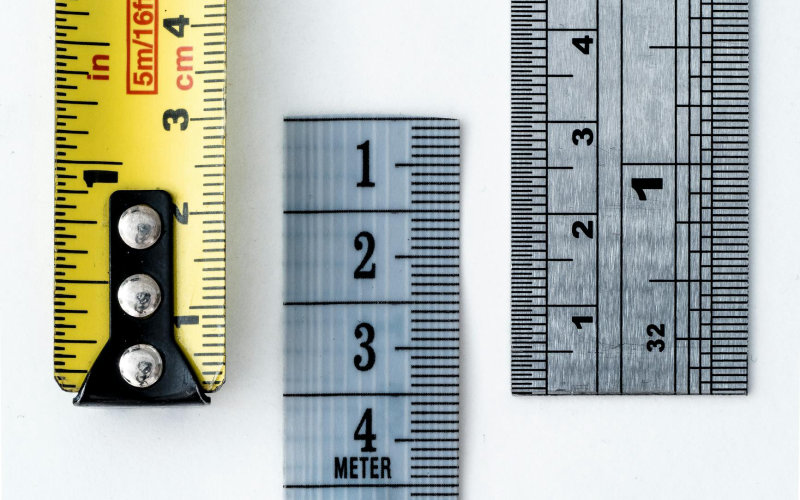

Most people who start a DIY home project fail before they ever pick up a saw. Not because they lack skill. Not because they chose the wrong materials. They fail because they measured wrong — and they used the wrong tools to do it.
Here’s the truth most home improvement guides won’t tell you: your tape measure is not enough. A $12 tape measure and a pencil cannot give you the precision that transforms a decent project into something extraordinary. The difference between a crooked tile floor and a flawless one is almost never talent. It’s tools. Specifically, the underrated measuring tools for DIY home projects that sit in professional contractors’ bags while homeowners keep reaching for the same three instruments they’ve owned since 2009.
I built a raised deck extension in 2022. Three weekends of work. Came out almost perfect — except one corner sat 11mm off square. Looked fine from a distance. Drove me crazy up close. I later learned a $30 tool would have fixed it in 90 seconds. So let’s talk about the tools worth knowing.
1. A Digital Angle Finder (Not Your Grandfather’s Protractor)
Analog protractors are fine. But a digital angle finder? Genuinely different. These devices read angles to 0.1-degree precision and most models lock in place so you can transfer the measurement directly to your material. Ryobi’s RA100 and the Wixey WR300 are both under $35 and both accurate enough for trim work, stair stringers, and crown molding cuts. That last one — crown molding. is where most DIYers suffer. The angles are unforgiving. A digital finder eliminates the guesswork entirely.
2. A Laser Distance Measurer for Large Rooms
Stop pacing rooms with a tape measure stretched across 22 feet of open floor. A laser distance measurer gives you readings in under a second, accurate to within 1.5mm, and you can do it alone. Bosch’s GLM400CL, released in late 2025, includes a built-in camera that overlays the measurement onto a live image of your room. Useful? Ridiculously. For calculating flooring square footage, planning furniture layouts, or estimating paint quantities, this tool pays for itself on the first project. You only need to miscalculate a flooring order once to understand what I mean.
3. A Marking Gauge for Consistent Woodwork Lines
Tape measures mark points. A marking gauge marks lines. Precise, repeatable, parallel lines. This is the tool cabinet makers have used for centuries, and it’s the tool most weekend woodworkers have never touched. Set the fence distance once, run it along your board, and you get a perfectly consistent scribe line every single time. The Veritas Dual Marking Gauge, around $55, is the one I’d hand to someone building their first set of floating shelves. And no, a pencil and a ruler are not the same thing. Not even close.
4. A Self-Leveling Laser Level
A standard bubble level is useful. A self-leveling laser level is transformational. When you’re installing a backsplash, hanging a gallery wall, or tiling a bathroom, you need a continuous reference line, not a single point check.
The Dewalt DW088K projects crisp horizontal and vertical lines simultaneously and self-corrects for surface tilt up to 4 degrees. I’ve used mine on everything from kitchen cabinet installation to fence post alignment. Projects that used to take two people now take one.
That matters when you’re working on a Saturday morning and your spouse has already been patient enough.
5. A Combination Square, Used Properly
Most homeowners own one of these and use it for exactly one thing: checking 90-degree angles. That’s fine. But a combination square does so much more. Use it to transfer measurements, mark parallel lines, find the center of a board, or check depth. The Starrett 11H-12-4R has been the gold standard since the 1980s. At about $80, it’s the best-built hand tool I’ve ever bought. So. before you dismiss this as something you already own, are you actually using all four functions? Most people aren’t.
6. A Contour Gauge for Irregular Profiles
Here’s the one that made me genuinely angry I hadn’t known about it sooner. A contour gauge. sometimes called a profile gauge, looks like a comb. Press it against any irregular surface and the teeth conform to the exact shape. Now trace that shape onto your material. Perfect cutouts around door casings, baseboards, pipes, tile edges. What used to require 40 minutes of paper templates and cursing now takes 90 seconds. The General Tools 833 is $15. Fifteen dollars. It’s almost insulting how useful it is for the price.
7. A Plumb Bob for True Vertical Alignment
Digital tools are great. But sometimes you need something that simply works, every time, with zero batteries and zero calibration. A plumb bob hangs a weighted point from a string using gravity as your reference.
It’s the most honest vertical reference you can get. When you’re installing a door frame, setting posts for a pergola, or marking a wall layout, a plumb bob gives you an absolute vertical that a laser level can sometimes miss if the floor beneath it isn’t level. The Tajima PL-350BK is built like a piece of equipment, not a toy.
It costs $25 and will outlive every other tool in your bag.
What Most Guides Get Wrong
Every tool list you’ll find online celebrates the flashy stuff: laser levels, digital calipers, high-end squares. And those tools matter. But nobody talks about the fundamental mindset shift that makes them effective. Measurement isn’t just about accuracy at one point in time. it’s about building a system where every step confirms the last one. Use your laser level to establish your baseline. Use your combination square to verify your cuts. Use your contour gauge to handle the exceptions. Each tool catches what the previous one might have missed.
The homeowners I hear from most often, people who’ve built something beautiful and felt genuinely proud of it. didn’t just buy better tools. They built a process where accuracy compounds. Every check confirms the last. Every measurement earns the next step. That’s not just good DIY practice. That’s how you build anything that lasts.
Start with the contour gauge and the digital angle finder. Under $50 total. Use them on your next project and notice how differently you feel standing back and looking at the finished work. That feeling, that’s what precision actually builds.
Photo by William Warby on Pexels

