
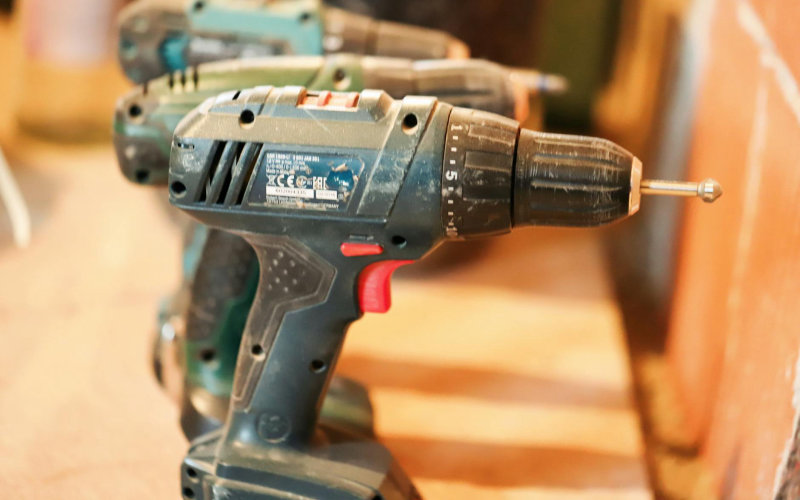

I bought my first cordless drill in 2009. A Ryobi 18V from Home Depot, about $89 on sale. Felt like the future. Three years later the battery was garbage—wouldn’t hold a charge through a single shelf-hanging session—and I ended up borrowing my neighbor’s ancient Black & Decker corded drill to finish the job. That moment stuck with me, because the “better” tool was the one collecting dust in his garage since 1997.
Here’s the thing nobody tells you when you’re standing in the tool aisle squinting at specs: the best drill for your home isn’t the one with the highest voltage or the longest runtime. It’s the one that matches how you actually work. And most people have no idea which category they fall into until they’ve already spent $150 on the wrong one.
So let me save you that mistake. I’ve used both types extensively over 12 years of home ownership—built a deck, finished a basement, hung approximately 900 pounds of shelving (rough estimate), and helped three friends gut and redo their kitchens. Here’s what I actually know.
Power: Does the Cord Really Matter Anymore?
Honestly? Less than it used to.
Around 2018, cordless drills still showed a noticeable gap in sustained torque versus corded models. That gap is basically gone now, at least for typical home use. A modern 20V brushless drill from DeWalt or Milwaukee—the DCD800 or the Milwaukee 2801-20, for instance—delivers somewhere around 500 in-lbs of torque. Enough to drive lag bolts into deck lumber without breaking a sweat.
But corded drills still win on raw, sustained power when things get serious. Drilling through thick concrete, running a hole saw repeatedly through a 2×10 for hours, any extended work where the motor needs to hold peak output without cooling off—corded wins. No debate.
For 95% of home tasks, though? Mounting TVs, assembling furniture, hanging curtain rods, building basic shelving. You’ll never feel the difference.
Battery Life and the Real Cost of Going Cordless
This is where cordless gets complicated. And expensive.
The drill itself might run $129. But good lithium-ion batteries cost $50 to $80 apiece, and you want two minimum. So you’re already at $230-plus before you’ve driven a single screw. Then the batteries start degrading. Manufacturers love to claim 1,000 charge cycles, but in actual household use—occasional deep discharges, storage in a hot garage—you’re realistically looking at 3 to 5 years before things get noticeably weak. Maybe 7 or 8 if you’re unusually careful.
I replaced the batteries on my DeWalt 20V kit in 2022. Two 5Ah batteries: $114 after a sale at Lowe’s. Real money. A corded drill has zero battery costs. Ever.
So if you’re buying a drill purely for occasional weekend projects, a corded option in the $40 to $70 range (something like the Black & Decker DR260C) will cost you far less over a decade. The math isn’t close.
Convenience and Where You Actually Work
Now here’s where cordless earns its premium. Truly.
Think about where drilling actually happens in your house. Up a ladder hanging gutters. Crouched inside a cabinet installing hinges. Flat on your back under a sink. Wedged in a closet where a cord would snag on absolutely everything. These aren’t hypotheticals—they’re Tuesday. And dragging a cord through all of them is genuinely annoying, not mildly annoying but the kind that makes you put off projects because you’re already dreading the setup.
Cordless wins the convenience argument completely. No extension cord math, no tripping hazards, no unplugging and re-plugging as you migrate room to room. Grab it and go.
But—and this actually matters—if your projects mostly happen in one fixed spot, like a workbench in a dedicated garage, that advantage mostly evaporates. A cord reaching a nearby outlet is zero inconvenience.
Weight and Fatigue Over a Long Day
Cordless drills are heavier. Just physics—the battery adds real weight. A standard 20V cordless with battery runs about 3.5 to 4.5 lbs. A comparable corded drill? Usually 2.5 to 3.5 lbs.
Doesn’t sound significant. But hold something overhead at arm’s length for two hours and that extra pound starts having a serious conversation with your shoulder. Installing recessed lighting, hanging ceiling fans, working on roof framing—lighter sometimes beats more convenient.
Which Drill Brand Should You Actually Buy?
Brand loyalty in tools is real, and it matters more than most people admit—specifically because of the battery ecosystem question.
Going cordless means you’re not just buying a drill. You’re joining a battery platform. DeWalt 20V MAX, Milwaukee M18, Makita 18V LXT, and Ryobi ONE+ are the four systems worth committing to in 2025. Pick one and stay with it, because those batteries run across dozens of tools in the same family. A Milwaukee M18 battery powers your drill, circular saw, flashlight, job site radio. That’s where the real value shows up.
For corded, brand matters a lot less. Corded drills are simpler machines with fewer things to fail. A $55 Porter-Cable PC600D will outlast the ambition of most casual DIYers, no problem.
Who Should Buy What: A Straight Answer
Get a cordless drill if you work in multiple spots around your home, tackle projects regularly (at least monthly), and plan to eventually build out a tool collection. The battery ecosystem pays real dividends over time.
Get a corded drill if your projects are light and infrequent—annual stuff, one set of shelves, a curtain rod, the occasional furniture assembly. You don’t need a $200 battery system for that. A $45 corded drill living in a drawer works fine.
And here’s the option most articles skip entirely: buy both. A cheap corded drill for stationary, heavy-duty work near an outlet, plus a mid-range cordless for moving around the house. I did exactly this in 2021—$49 for a refurbished Porter-Cable corded, $179 for a DeWalt 20V brushless kit—and it’s the most practical setup I’ve ever had.
Bottom Line
Here’s something I genuinely haven’t seen anyone else write: the cordless vs. corded question is really a question about how you store energy. Batteries store effort—you charge them ahead of time, they give it back when you need it. Cords pull effort from the grid in real time. For a home user, your actual limiting factor is almost never power or portability. It’s friction. The drill you reach for without thinking is the one that gets used, and the one that gets used is the one that gets the job done. Buy whichever has the lowest barrier to picking it up. That’s your answer.
Frequently Asked Questions
Is a cordless drill powerful enough for drilling into concrete?
For light masonry—anchor bolts in brick or mortar—yes, a solid 20V brushless cordless drill handles it fine. For heavy concrete work, you want a hammer drill, and in that case corded is still the stronger choice for extended use.
How long do cordless drill batteries actually last?
With normal home use, expect 3 to 7 years before you notice a real performance drop. Store them at roughly 50% charge in a cool, dry spot (not a hot garage) and you’ll stretch that lifespan considerably.
Can I use a corded drill for outdoor projects?
Absolutely. You’ll need an outdoor-rated extension cord—12 or 14 gauge for runs over 25 feet. The drill itself doesn’t care about being outside; just keep it dry and don’t leave it sitting in the rain.
What’s the best first drill for a new homeowner in 2025?
I’d go with the DeWalt DCD777C2 20V brushless combo kit, currently around $139 to $149. Two batteries included, brushless motor means longer overall life, and you’re starting a DeWalt 20V collection you can expand whenever you’re ready. Solid entry point without overspending.
Photo by Christina & Peter on Pexels

