
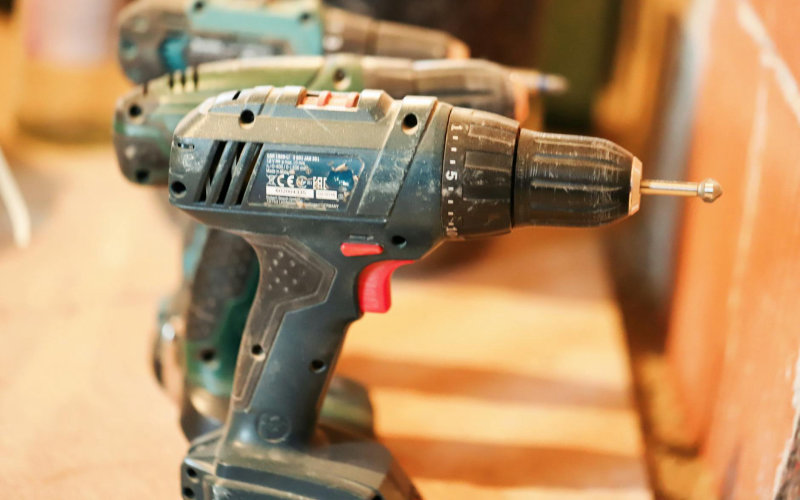

My neighbor spent $220 on a corded drill last spring. Beautiful machine. Powerful as anything. And it’s sat in his garage collecting dust ever since because he can never find an outlet close enough to where he’s actually working.
That’s exactly the kind of mistake that happens when you buy based on specs instead of your actual life. Because the “best” drill is almost never the most powerful one — it’s the one that actually gets used.
So if you’re standing in the tool aisle right now feeling completely lost, I’ve been there. Twelve years writing about home improvement, and I still watch people overthink this constantly. Let me just cut through it.
What You’re Actually Going to Use a Drill For
Be honest with yourself here. Not what you imagine you’ll tackle someday. What you’ll realistically do in the next 12 months.
For most first-time homeowners, that list looks nearly identical across the board: hanging curtain rods, assembling flat-pack furniture (yes, even IKEA stuff goes faster with a drill), mounting a TV bracket, putting up shelves, maybe swapping out a door hinge. That’s 90% of homeowner drilling right there.
None of those jobs demand serious sustained power. None of them require you to be tethered to a wall. And that distinction matters enormously when you’re weighing a cordless drill vs corded drill for homeowners who are just getting started.
The Case for Cordless (And Why It Usually Wins)
Cordless drills have gotten genuinely excellent over the past decade. Embarrassingly good, honestly, compared to what they were back in 2012.
The DeWalt DCD771C2, for example, has been a bestselling cordless model for years — delivers 300 unit watts out, which is more than enough to handle basically anything a homeowner throws at it. The Milwaukee M18 line, the Ryobi ONE+ ecosystem — these aren’t toys anymore. They’re serious tools.
But the real win with cordless is pure freedom. You take it wherever you need it. Attic? Sure. Backyard fence? No problem. That weird corner behind your washing machine where there’s no outlet within 20 feet? Cordless handles it without drama. That mobility is something a corded drill simply cannot give you, and once you’ve worked with it, going back feels genuinely absurd.
Battery life is also less of a worry than people expect. A fully charged modern 20V battery will get through an entire Saturday’s worth of homeowner tasks without breaking a sweat. And most kits come with two batteries anyway, so you’re basically always covered.
The Case for Corded (And When It Actually Makes Sense)
I’ll be straight with you here: corded drills shine in specific situations that most first-time homeowners rarely run into.
If you’re regularly drilling into masonry, doing extended concrete anchor work, or running a drill for three-plus hours without stopping — corded wins. The power never fades. No battery management. Just consistent torque until you’re done. Contractors love them for exactly that reason.
But you’re not a contractor. Probably.
A Bosch 1194VSR corded drill will outperform a cordless in raw sustained power every single time. But if your project is hanging a gallery wall on a Saturday afternoon, that extra power is completely irrelevant. You’d be buying performance you’ll never actually need.
And the cord itself? It’s annoying in ways you genuinely can’t appreciate until you’re tangled in it for the fourth time trying to install cabinet hinges.
Price: The Number That Actually Matters
Let’s talk money, because this is where people consistently get confused.
A decent entry-level cordless drill kit — something like the Ryobi PCL206K2 (18V, two batteries, charger included) — runs around $99 to $129 at Home Depot. Complete package, everything out of the box.
A comparable corded drill? Often $50 to $80. So yes, corded is cheaper upfront.
But here’s the math nobody actually does: if you already own tools in a cordless battery ecosystem (Ryobi, DeWalt, Milwaukee), you can buy a bare-tool drill and run it on existing batteries. Suddenly the “cordless is expensive” argument collapses entirely. A bare-tool cordless drill can run $60 to $90, and you’ve already got the charger sitting in your garage.
For complete beginners with zero existing tools, the $30 to $50 gap between entry-level corded and entry-level cordless is real — but small. Don’t let it be the deciding factor.
Weight and Handling: The Thing Specs Don’t Tell You
A corded drill is heavier than you expect. Not brutally so, but noticeably.
And when you’re doing overhead work — which you will do, because almost every mounting job involves some of it — every extra ounce matters more than any spec sheet will admit. After 20 minutes drilling up into ceiling joists, your arm knows exactly what I mean.
Modern cordless drills have gotten lighter too. The Milwaukee M12 Fuel line (12V) weighs around 2.3 lbs. The Ryobi PCL206 sits at about 3.5 lbs. Compare that to a corded drill, which often runs 4 to 6 lbs once you factor in a heavy-gauge cord pulling backward on your grip.
Lighter tools get used more. It’s really that simple.
Battery Ecosystem: The Long Game
Here’s something I genuinely wish someone had told me when I bought my first tool.
Pick a battery brand and stick with it. Ryobi’s ONE+ system covers over 280 tools that all share the same 18V battery. DeWalt’s 20V MAX line works the same way. Once you’re inside an ecosystem, every new tool you add costs less because you’re already sitting on the batteries.
A cordless drill is almost always your entry point into one of these systems. So buying cordless isn’t just buying a drill — it’s making a long-term investment in a platform that’ll grow with you as a homeowner.
Corded drills offer none of that. They’re standalone purchases, every single time.
Bottom Line
Here’s the insight that actually reframes this whole decision: the cordless vs corded debate isn’t really about power or price. It’s about friction.
Every barrier between you and starting a project — finding an extension cord, hunting for an outlet, untangling a cable — is a reason to put the job off until next weekend. Then the weekend after that. Then three months pass and the curtain rod is still sitting in the box.
Cordless drills win for first-time homeowners not because they’re technically superior (they’re not, not always), but because they eliminate that friction entirely. The drill is charged, it’s in its case, you grab it and start in 30 seconds. That’s what actually gets home improvement done.
Buy cordless. Start with Ryobi or DeWalt if you’re budget-conscious. Go Milwaukee if you want to invest heavier upfront. You won’t regret it.
Frequently Asked Questions
Is a cordless drill powerful enough for a first-time homeowner?
Absolutely. Most modern 18V or 20V cordless drills deliver more than enough torque for hanging shelves, assembling furniture, mounting hardware, and light carpentry. Unless you’re drilling into concrete on a regular basis, you won’t come close to hitting the power ceiling.
What voltage cordless drill should a homeowner buy?
For homeowner use, 18V or 20V is the sweet spot. A 12V drill is lighter but can be underpowered on tougher jobs. Anything above 20V is typically contractor-grade overkill. Stick with 18V or 20V and you’re covered for nearly everything you’ll encounter.
Can I use a cordless drill for outdoor projects?
Yes — and this is actually where cordless genuinely outperforms corded. Fence repairs, deck work, building a raised garden bed — these are all situations where dragging an extension cord 60 feet across your yard becomes a real pain fast. Cordless is the obvious answer.
How long does a cordless drill battery last?
It depends on the task, but for typical homeowner projects — a few hours of intermittent drilling and driving screws — a single 2Ah battery comfortably gets through the day. Most starter kits include two batteries anyway, so honestly, this barely registers as a concern.
Photo by Christina & Peter on Pexels

