
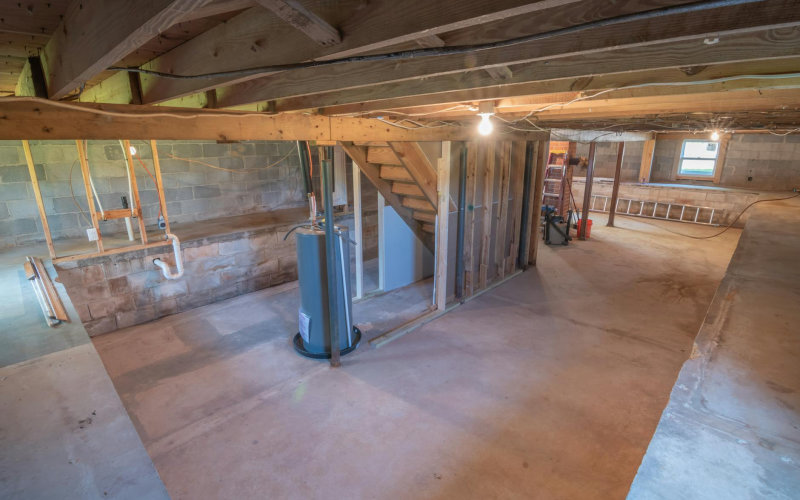

You walk into your basement, you crack open a gallon of DryLok, and you think: this is the year the leaking stops. Three weeks later, the paint is bubbling, peeling away in sheets, and your wall looks worse than before you started. Sound familiar? I’ve heard this story from dozens of homeowners, and I’ve lived a version of it myself back in 2019 when I spent a weekend coating my foundation walls only to watch the whole thing fail by the first heavy rain in October.
Here’s the truth most manufacturers won’t say on the label: waterproofing paint doesn’t stop water. It stalls it. And there’s a massive difference between those two things.
The Fundamental Physics Problem Nobody Warns You About
Water doesn’t just seep through basement walls. It pushes. Hydrostatic pressure — the force of water-saturated soil pressing against your foundation — can measure anywhere from 2 to 10 pounds per square inch on a wet day. Paint has zero structural strength against that kind of force.
Think about it this way. You wouldn’t tape a piece of paper over a leaking pipe and call it fixed. That’s essentially what basement waterproofing paint does. It creates a surface barrier with no mechanical bond strong enough to resist water that’s actively pushing from the other side. When that pressure builds up behind the painted surface, the coating delaminates. Every time.
The science here isn’t complicated. But the marketing on those paint cans is designed to make you forget it.
Why Basement Waterproofing Paint Fails Even When Applied Correctly
Most guides blame failed waterproofing paint on bad application. Wrong prep, wrong brush technique, wrong number of coats. And sure, sloppy prep makes things worse. But even contractors who follow every instruction on the label — surface dried, wire-brushed, two coats applied. report peeling within 90 days when active moisture is involved.
The real culprit is negative-side pressure. Your foundation wall is wet from the outside in. You’re applying a coating on the inside. The water driving through the pores of that concrete has nowhere to go except behind your paint film. It builds. It escapes. Your paint goes with it.
I talked to a mason contractor in Cincinnati last year who had re-coated the same customer’s walls three times over 18 months using premium waterproofing paint. Third time, same result. He switched to a crystalline waterproofing compound, problem solved in one application.
What Crystalline Waterproofing Actually Does
This is the approach serious contractors land on after the paint experiments stop working. Products like Xypex, Krystol, and BASF MasterSeal 581 use a completely different mechanism. Instead of coating the surface, they penetrate the concrete and chemically react with moisture to form insoluble crystals inside the pores and capillaries of the wall itself.
You’re not blocking water from the surface. You’re changing the structure of the concrete from within.
These crystals actually continue growing when they contact water. So every time moisture tries to work its way through, the crystalline barrier gets denser. It’s self-healing in a way no paint ever could be. Xypex, for instance, has been tested to withstand hydrostatic pressure exceeding 410 feet of water head. No paint manufacturer on earth makes that claim.
And they’re not expensive exotic products reserved for commercial builds. A 50-pound bag of Xypex Concentrate runs about $180 and covers roughly 150 square feet. That’s comparable to what you’d spend on two cans of premium waterproofing paint. except this actually works.
The Drainage Solution Most Homeowners Skip Entirely
Here’s what separates a real basement waterproofing job from a surface fix: water management. Professional waterproofing contractors don’t just treat walls. They redirect water before it reaches the wall in the first place.
Interior drainage channels, systems like WaterGuard or the French drain method. collect water at the base of the foundation wall and route it to a sump pump. This is the approach used in the vast majority of professional basement waterproofing jobs I’ve researched. Companies like Basement Systems and Woods Basement Systems have installed millions of linear feet of this type of drainage since the early 2000s. There’s a reason they’re not selling paint.
Exterior drainage matters too. Proper grading, downspout extensions, and drain tile installed on the outside of your foundation wall address the problem at its actual source. But that requires excavation, which costs real money, typically $8,000 to $15,000 for a full exterior waterproofing job on a standard house. So most homeowners skip it.
Don’t skip the interior drainage solution, though. A sump pump system with battery backup runs $1,500 to $3,500 installed and handles the load that paint was never designed to handle.
When Epoxy Injection Actually Makes Sense
Now, not every wet basement is a hydrostatic pressure problem. Some basements have water intrusion through specific cracks. typically shrinkage cracks in poured concrete walls. These are the straight, narrow, vertical lines that develop as concrete cures and contracts.
For those situations, epoxy injection or polyurethane foam injection is what contractors reach for. Polyurethane foam expands to fill and seal active leaks, even in wet conditions. Epoxy injection creates a bond stronger than the concrete itself and works best on dry cracks where structural repair matters.
Neither of these is a “paint the wall” solution. Both require injecting material directly into the crack under pressure. Done properly, a single crack injection lasts decades. This is why you’ll see basement waterproofing companies like Perma-Seal and TerraFirma offering crack injection as a warranty-backed service, because it actually holds.
The Honest Truth About DIY Basement Waterproofing
You can do some of this yourself. Crystalline waterproofing compounds like Drylok Extreme (yes, they make a legitimate product beyond the standard paint) or RadonSeal Deep-Penetrating Concrete Sealer are available at Home Depot and actually do penetrate the substrate rather than sit on top of it. RadonSeal in particular has genuinely solid reviews from homeowners with minor efflorescence and seepage issues.
But if your basement floods during heavy rain, if you see white mineral deposits (efflorescence) actively forming on your walls, or if you have standing water pooling at the base of your foundation. no product you brush on is solving that. You need drainage. You need a professional assessment.
What I’d Do
Stop buying waterproofing paint. Not because it’s the wrong product for the wrong people, it might work fine on a garage floor with minor humidity issues. but because it’s routinely sold to homeowners whose water problems are way beyond what a surface coating can handle.
If I had moderate basement moisture, I’d start with RadonSeal or a crystalline compound and regrade the soil away from my foundation. If I had active seeping or flooding, I’d call a contractor and ask specifically about interior drainage channels and a sump pump before I spent a single dollar on anything you brush onto a wall. The paint aisle at your local hardware store is the most expensive detour you can take on the road to a genuinely dry basement.
Photo by Curtis Adams on Pexels

