

Your home is your environment. And your environment shapes everything — your energy, your focus, your mood, your output. So let me ask you something direct: why are you still walking across the room to flip a switch that hasn’t changed since 1963?
This isn’t a small question. The smart home upgrade trends replacing traditional switches thermostats 2026 are not just about convenience. They’re about taking command of your environment the way high performers take command of their day. The Americans who are upgrading right now aren’t doing it because it’s trendy. They’re doing it because they understand that your surroundings either serve your life or they drain it.
I’ve been tracking home technology for over a decade, and I’ll tell you honestly — what’s happening this year is different. The pace has accelerated sharply. In 2024, about 38 million U.S. homes had some form of smart climate or lighting control. By early 2026, that number crossed 54 million. That’s not a trend. That’s a shift in how Americans think about their living spaces.
The Death of the Dumb Thermostat
Let’s start with what’s disappearing fastest. Traditional bimetallic thermostats — the round white Honeywell units your parents had. are being ripped off walls at a rate that would have seemed impossible five years ago.
The replacements aren’t just “smarter.” They’re fundamentally different tools. The Ecobee SmartThermostat Premium, now in its fourth-generation refresh released in January 2026, uses occupancy sensors in every room, not just the hallway. It learns your schedule within about four days. Users in a 2025 Lawrence Berkeley National Laboratory study of 11,000 homes cut their HVAC costs by an average of 23 percent in the first year. That’s not incremental improvement. That’s transformation.
Google’s Nest Learning Thermostat 5, launched in late 2025, added air quality monitoring and integrates directly with your home’s ventilation system if you have one. And the setup takes 22 minutes. I know because I installed one myself in February and timed it specifically.
Smart Switches Are Replacing Dimmers, And More Than Dimmers
Here’s what most guides miss. People think smart switches just let you control lights from your phone. That’s selling them about 80 percent short.
Lutron Caseta’s 2026 Diva series, priced around $54 per switch, communicates via Clear Connect RF instead of relying on your Wi-Fi. That matters enormously. Your Wi-Fi goes down; your lights still work, your schedules still run, your automations still fire. Leviton’s new Decora Smart Z-Wave 800 switches, which started shipping in March 2026, use mesh networking across all your switches so the more you install, the more reliable the entire system becomes.
But here’s the part worth knowing. These switches aren’t just replacing dimmers. They’re replacing whole-home wiring headaches. Inovelli’s Blue Series dimmers work with Zigbee 3.0 and don’t require a neutral wire. which means older homes built before 1985, where most switch boxes lack that wire, can finally upgrade without calling an electrician. That single feature opened up smart switching to roughly 30 million older American homes that were previously locked out.
Voice and App Control Changed the Psychology of Your Home
There’s a psychology principle I’ve spoken about for years: when you lower the friction between intention and action, you radically increase the likelihood of the behavior. That’s exactly what voice-integrated smart switches and thermostats do to your home routines.
When your thermostat knows you leave at 7:15 a.m. every weekday, it stops heating the house at 6:45. When your switches know you go to bed around 10:30, they start dimming the living room at 10:15. You’re not just saving electricity, you’re building an environment that moves with you instead of against you.
Amazon’s Alexa integration with the new Ring Smart Lighting Pro ecosystem, fully launched in April 2026, now allows geofencing triggers so granular you can set different lighting scenes based on whether you’re one mile away or pulling into the driveway. Your home starts waking up before you open the front door.
The Energy Cost Argument Is Stronger Than Ever
So here’s a number that should sharpen your focus. The average American household spent $2,411 on energy in 2025, according to the U.S. Energy Information Administration. Smart thermostats and occupancy-based lighting controls together can trim that bill by 18 to 27 percent depending on your usage patterns.
At the low end, that’s roughly $434 back in your pocket every year. One Ecobee thermostat costs $249. You’re cash-positive inside seven months, and then it keeps paying you. That’s not a home improvement. That’s a financial decision.
And federal rebates are still live. The Inflation Reduction Act provisions that cover smart thermostat installations were extended through 2027, meaning you can claim up to $150 back at tax time on qualifying devices. Stack that with your state utility rebate. California’s PG&E, Texas’s Oncor, and New York’s Con Edison all have programs running right now, and your payback window shrinks to under four months in many cases.
What’s Actually Different About 2026 vs. 2023
Here’s the honest truth about why this year feels like a gear change. Three years ago, smart home tech was fragmented. You had Apple HomeKit devices that wouldn’t talk to Google Home devices, and Z-Wave products that required separate hubs the size of a small router. It was a mess. I bought a Wink hub in 2019 and watched the company basically evaporate.
Matter protocol changed all of that. By the start of 2026, over 2,200 certified Matter-compatible devices exist across 135 manufacturers. Your Lutron switch talks to your Nest thermostat talks to your Amazon Echo without a translator in between. The friction that kept cautious homeowners on the sidelines is largely gone. And when friction drops, adoption surges. That’s exactly what we’re watching.
Where to Start.
My Actual Recommendation
If you’re standing at the beginning of this, here’s what I’d do. Start with one thermostat. Not every thermostat in your house. One. The Ecobee SmartThermostat Premium or the Nest 5, either will serve you well, and both work with Matter now. Get familiar with the app, watch your energy report for thirty days, and let the data make the case.
Then add two smart switches in your highest-traffic spaces. Your kitchen or living room. Lutron Caseta if reliability matters most to you. Inovelli Blue Series if you have older wiring.
The point isn’t to automate everything at once. The point is to start building an environment that works for you instead of one you’re constantly managing. Your home should energize your life. and right now, in 2026, the tools to make that happen are more accessible, more reliable, and more affordable than at any point in history. The only question is whether you’re ready to use them.
FAQ
Do smart switches work with older homes that don’t have neutral wires?
Yes, several 2026 models like the Inovelli Blue Series and Lutron Caseta line work without a neutral wire. This covers most homes built before 1985, which is a huge portion of the American housing stock.
Is Matter compatibility important when buying smart home devices in 2026?
Genuinely, yes. Matter-certified devices work across Apple, Google, Amazon, and Samsung ecosystems without extra hubs. You protect your investment against platform lock-in, which has burned a lot of early adopters badly.
How long does it take to install a smart thermostat yourself?
Most people finish in 20 to 35 minutes if their existing wiring is standard. The Ecobee and Nest both ship with detailed wire labeling guides and app-based installation walkthroughs that are actually well designed.
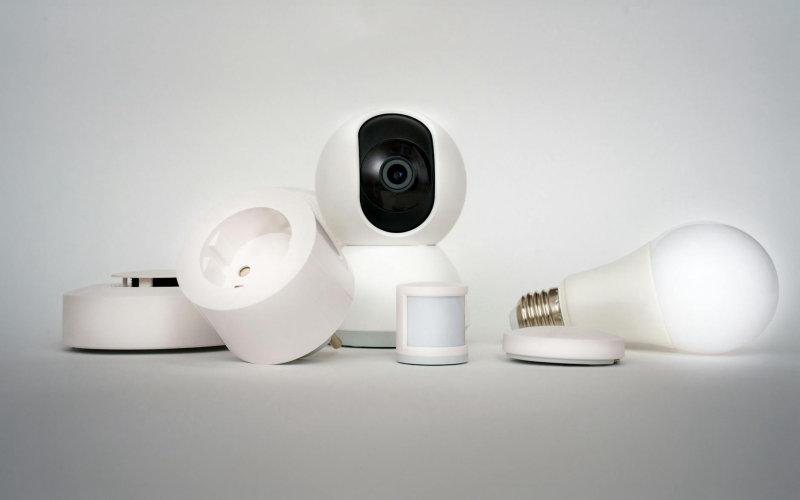
Photo by Jakub Zerdzicki on Pexels

