

My energy bill hit $347 one February. Same house, same thermostat setting I’d used for three winters straight. I called the utility company, dead certain there was a meter error. There wasn’t.
Turns out my attic insulation had been quietly falling apart for about two years. Settling, moisture damage, a gap near the eave vents I never would’ve found without crawling up there in the dark with a flashlight. That one problem accounted for roughly $280 of “mystery” heating loss across that entire winter. I fixed it for $180 in materials and four hours of genuinely miserable attic work.
Here’s the thing — most homeowners never look up there. Not until something goes catastrophically wrong, anyway. And by then? You’ve already handed a few hundred dollars a year straight to your utility company. So let me save you that. These are the eight warning signs your attic insulation is failing you right now.
1. Your Heating or Cooling Bills Keep Climbing for No Obvious Reason
This is the one that finally got my attention. If your energy bills have crept up 15-25% over two or three years and you haven’t changed your habits or added appliances, your attic is almost certainly the main suspect.
The Department of Energy estimates inadequate attic insulation accounts for up to 25% of a home’s total heating and cooling loss. Not a trivial slice. A home in a cold climate spending $1,800 annually on heat could be hemorrhaging $450 just through the attic ceiling.
Pull your bills from the same month, three years running. Compare them. Even accounting for rate increases (usually 3-5% annually), anything spiking beyond that is worth investigating before next winter rolls around.
2. Certain Rooms Are Always Too Hot or Too Cold
You know exactly which room I mean. The one where guests apologize for needing an extra blanket. Or the upstairs bedroom that turns into a sauna every July no matter what you do to the thermostat.
Uneven temperatures almost always point to insulation failures — either in the attic above those spaces or in the floor framing below them. But if it’s consistently an upstairs room causing grief, I’d bet on the attic before anywhere else.
And the fix isn’t always expensive. Sometimes it’s just adding blown-in insulation over one section of joists. A bag of Owens Corning blown-in insulation covers about 40 square feet at the recommended R-38 depth and runs around $25-$30 at Home Depot.
3. You Can See the Attic Floor Joists
Go up there with a good flashlight. Can you see the tops of those wooden joists clearly? That’s bad.
A properly insulated attic should have insulation sitting well above the joists — in most climate zones, we’re talking R-38 to R-60, which translates to roughly 10-15 inches of depth. If your joists are visible or barely covered, you’re running on fumes. Literally.
Homes built before 1980 are especially vulnerable here. Building codes back then allowed insulation levels we’d consider embarrassingly inadequate today. A 1975 ranch house I helped a friend assess had maybe 3 inches of old fiberglass batts sitting up there. His annual savings after a proper re-insulation job? Around $410 per year, according to the contractor’s post-job energy audit.
4. Ice Dams Forming on Your Roof Every Winter
Ice dams are gorgeous to look at. They’re also proof your attic is betraying you.
When heat escapes through an inadequately insulated attic, it warms the roof deck and melts the snow sitting on it. That meltwater runs down toward the cold eaves and refreezes. Over and over. The resulting ice dam can back up under shingles and cause water damage that makes your insulation problem look cheap by comparison.
So if you’re seeing consistent ice dams every winter — especially when neighbors with similar roof pitches aren’t — attic heat loss is almost certainly the culprit. Not the roof itself. The insulation underneath it.
5. Your HVAC System Runs Constantly
Short cycling is a furnace problem. But a furnace or AC unit that just… never really stops running? That’s usually a building envelope issue. Your attic, specifically.
When insulation fails, the conditioned air you’re paying to heat or cool escapes so fast your system can’t keep pace. It just keeps running. My neighbor Mike replaced his perfectly functional furnace in 2021 thinking it was dying — spent $4,200 — only to have the exact same problem afterward. His HVAC contractor finally checked the attic and found R-11 insulation (basically nothing) where there should’ve been R-49.
Before you ever replace a furnace or AC unit, have someone assess your attic insulation depth and continuity. A $150 energy audit could genuinely save you thousands.
6. Drafts Near the Top Floor Ceiling or Recessed Lights
On a cold, windy day, feel around your upstairs ceiling. Any hint of cool air movement near recessed light fixtures, ceiling fans, or where walls meet the ceiling? That’s attic air pushing into your living space.
Recessed lights are notorious for this. Most older can lights (pre-2012 or so) aren’t air-sealed, meaning there are literal holes in your ceiling opening straight into the attic. And here’s the part people miss — insulation can’t fix a gap. You need air sealing first, then insulation layered on top. Skipping that sealing step is one of the most common and costly attic DIY mistakes I see people make.
7. Moisture Stains or Mold on the Attic Sheathing
This one scares people — and honestly, it should, a little. But moisture problems in the attic aren’t automatically a roof leak situation.
Warm, humid air from your living space drifts upward, and when it hits a cold, poorly insulated attic, it condenses on the wood sheathing. Over time, that moisture causes staining, wood rot, and eventually mold. If you’re seeing dark streaking or fuzzy growth on the underside of your roof decking, inadequate insulation combined with poor ventilation is often the root cause — not a failing roof.
Get both assessed at the same time. A roofer handles the exterior. An insulation contractor or energy auditor evaluates what’s happening from the inside.
8. Your Home Smells Musty After It Rains
Subtle one. But real.
A musty smell that shows up after rain or during humid stretches — especially on the upper floor — often means moisture has been accumulating in the attic quietly for a while. Degraded or wet insulation loses most of its thermal resistance anyway. R-30 insulation that’s been through wet cycles can drop to R-9 or lower in some cases.
Wet insulation isn’t just an energy problem. It’s an air quality problem. Worth taking seriously.
Bottom Line
Here’s something I haven’t seen anyone write about directly: the attic insulation problems energy loss signs that hurt you most aren’t always the dramatic ones. Ice dams, visible joists — those are obvious once you know what to look for. What actually bleeds the most money over time is the “good enough” attic. The one that had code-minimum insulation installed in 2003 and has since endured 20 years of settling, minor moisture, and the occasional critter. Nobody flags it because nothing looks catastrophically wrong. But that slow degradation — insulation compressing from R-38 down to an effective R-24 — costs the average homeowner roughly $150-$200 every single year, quietly, without a single obvious symptom. Get in your attic once every three years. Measure the depth. Compare it against your climate zone’s recommended R-value. That’s genuinely all it takes.
Frequently Asked Questions
How do I know if my attic insulation is thick enough without calling a contractor?
Grab a ruler and go up there yourself. Measure the depth of insulation between your floor joists, then cross-reference with the Department of Energy’s ZIP-code-based R-value tool at energystar.gov. If you’re in Climate Zone 5 or 6 (most of the northern US), you need at least R-49 — that’s roughly 14-15 inches of blown cellulose.
Can old insulation just be topped off, or does it need full replacement?
Usually you can top it off, which is great news because it’s significantly cheaper. The main exceptions are if the existing insulation is wet, moldy, or contaminated by animal droppings — in those cases, removal comes first. Non-negotiable, both for performance and for your health.
How much does fixing attic insulation typically cost?
For a 1,200 square foot attic needing blown-in insulation added to reach code depth, expect $1,500-$3,000 installed professionally. DIY with rented blowing equipment runs $400-$700 in materials. Most homeowners recoup that cost within 3-5 years through energy savings alone.
Is attic insulation a DIY job or should I hire out?
Adding blown-in insulation on top of existing material? Totally DIY-able if you’re comfortable in tight, hot, miserable spaces. Air sealing around penetrations, dealing with existing mold, or working anywhere near knob-and-tube wiring? Please hire someone. Some situations up there genuinely aren’t worth the risk of getting wrong.
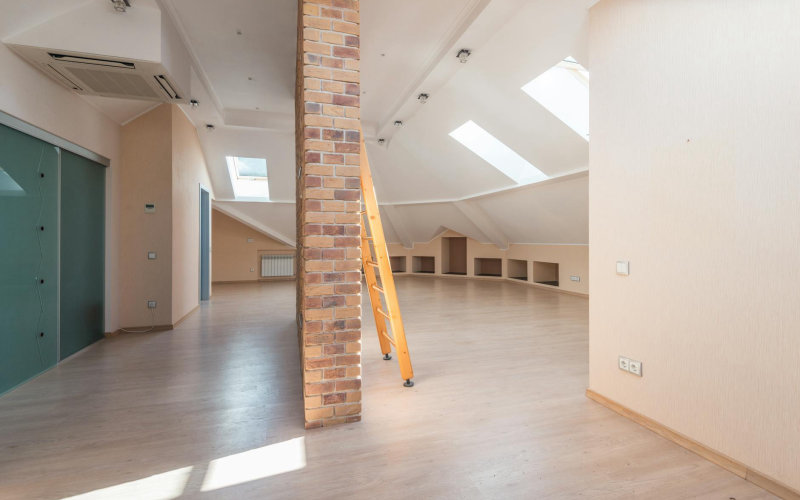
Photo by Max Vakhtbovych on Pexels

