
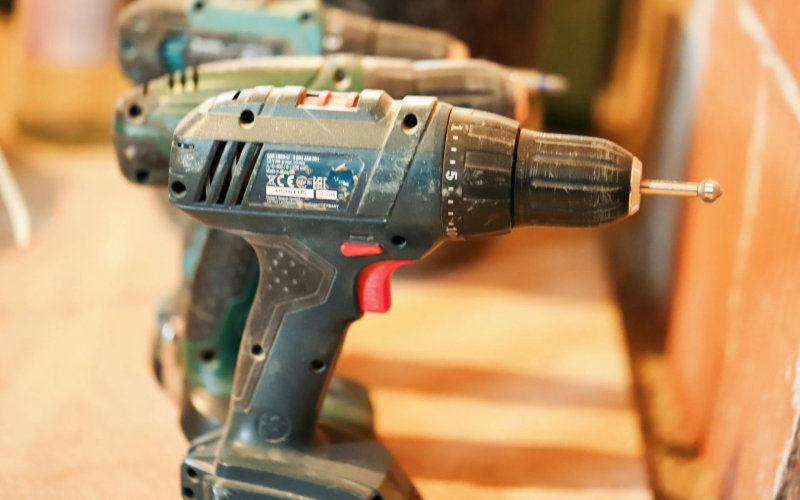

Most people overthink this decision. They spend three weekends reading spec sheets, watching YouTube teardowns, and asking strangers on Reddit — when the real answer comes from picking up both drills and getting to work. I’ve logged well over 100 hours across home projects with both types, from hanging kitchen cabinets in a 1940s Chicago bungalow to building a deck from scratch in 2024. And I’m here to tell you: the corded vs cordless drill for home use debate is simpler than the internet makes it look.
But only if you know what actually matters.
The Power Question — And Why It’s Not What You Think
Everyone assumes corded drills win on power. Mostly true. A 7-amp corded drill from DeWalt or Milwaukee will outmuscle the average cordless unit if you’re running it continuously for 45 minutes straight. But here’s the uncomfortable truth most comparison guides skip: the average homeowner never pushes a drill that hard. You’re not building a commercial framing crew. You’re hanging a TV mount, assembling IKEA shelving, or drilling pilot holes for a fence post.
In those scenarios — which account for probably 85% of home use. a modern 20V MAX brushless cordless drill keeps up with corded performance. Ridiculously well, actually. The Milwaukee M18 FUEL that I’ve been running since late 2023 has never once made me wish for a cord, even drilling through pressure-treated lumber.
Freedom Isn’t Free, But It’s Worth It
Cordless drills cost more upfront. A quality cordless setup, drill, two batteries, charger. runs you $150 to $280 depending on brand and voltage. A comparable corded drill? Sixty to ninety dollars. That gap is real.
But consider what you’re buying with that premium. You can carry your drill to the second-floor bathroom without hunting for an extension cord. You can work in the garage at 9 p.m. without tripping over cables. You can take it to your sister’s house to help assemble her new bed frame without a gear bag the size of a suitcase. Cordless tools don’t just change how you work, they change whether you actually start the project at all. And starting is everything.
Battery Life: The Honest Numbers
Here’s where cordless drills genuinely struggle. Not power. Batteries.
A standard 2.0Ah 20V battery lasts about 45 minutes to an hour of moderate use. maybe two hours of lighter work. If your project runs longer than that, you either need a second battery or a charger nearby. I learned this the hard way in April 2024 when I ran dead mid-project installing a new subfloor and had to sit waiting 30 minutes for a charge. Frustrating? Yes. Dealbreaker? No, but you need to plan for it.
The solution is simple. Buy a kit with two batteries. Most quality drills ship this way now. Swap and keep moving. It’s a system, not a flaw.
Where Corded Drills Still Win
Prolonged, heavy drilling. That’s where your corded drill earns its place.
If you’re boring dozens of 1-inch holes through joists for electrical runs, or running a hole saw through concrete repeatedly, a corded drill doesn’t just match a cordless. it outlasts it without slowing down. Voltage sag is real in cordless tools; as batteries deplete, torque drops slightly. On a tough project that means your final holes take longer than your first.
So if you’re doing a serious renovation, full bathroom gut, basement finishing, major deck construction. a corded drill as your primary power tool makes genuine sense. Plug it in, let it rip. No babysitting.
The Weight Factor Nobody Mentions Enough
Cordless drills are heavier. Not by a little. My Milwaukee M18 FUEL weighs 4.2 pounds with its 5.0Ah battery. A Bosch corded drill with the same power output weighs about 3.6 pounds. Half a pound sounds trivial until you’ve spent two hours overhead drilling into ceiling joists. Your shoulder will remind you that physics is real.
Now, this matters more to some people than others. If you’re working overhead frequently, or you have wrist or shoulder issues, that weight difference compounds fast. It’s worth holding both in-store before buying, not just reading specs on Amazon.
Cost Over Time: The Math Most Reviews Skip
Here’s a contrarian take: cordless drills are often cheaper in the long run for homeowners who build an ecosystem.
Once you’re in a battery platform. Milwaukee M18, DeWalt 20V MAX, Makita 18V LXT, every new tool you buy shares that same battery. Your drill’s battery runs your circular saw, your oscillating tool, your flashlight. The upfront cost of your battery platform pays dividends across every single tool you add. I bought into the Milwaukee M18 system back in 2022 and now run nine tools on the same two battery packs. The cumulative savings on batteries alone are well over $300.
A corded drill stays cheap forever. But it also stays isolated.
What Type of Homeowner Are You, Actually?
This is the question that cuts through everything.
If you drill maybe once a month. hanging pictures, assembling furniture, occasional small repairs, a cordless drill is the only answer. Convenience, freedom, and modern battery tech make it superior for light intermittent use. Full stop. Buy the DeWalt DCD777C2 or the Milwaukee 2801-22CT and don’t look back.
But if you’re the homeowner who spends every other weekend on a serious project, who runs the drill hard for multiple hours at a stretch, and who cares more about sustained performance than convenience? Keep a corded drill in the rotation. Not instead of cordless. Alongside it. At $80, a corded drill as a backup or secondary tool for heavy work is one of the smartest $80 you’ll spend on your shop.
What I’d Actually Do
Buy cordless first. Always. For the corded vs cordless drill for home use decision, cordless wins for daily homeowner life. hands down, no debate.
Get into a quality battery platform you can build on. Spend the extra $40 for a brushless motor; the efficiency and longevity gap over brushed motors is genuinely significant. Then, if you find yourself 12 months in doing major renovation work and feeling limited, pick up a corded drill as your dedicated heavy-duty backup. You’ll spend under $100 and gain a tool that handles the 5% of jobs where battery capacity and sustained torque matter.
Most homeowners never need that second tool. But it’s good to know the door’s open.
FAQ
Is a 20V cordless drill powerful enough for home use?
Yes, for almost everything a homeowner encounters. A 20V brushless drill handles wood, drywall, light masonry with the right bit, and metal up to about 3/8 inch. Only prolonged heavy-duty drilling, like running a large hole saw repeatedly through hardwood. will push you toward a corded tool.
How long do cordless drill batteries last before they need replacing?
Most quality lithium-ion batteries handle 500 to 1,000 charge cycles before noticeable capacity loss. For a typical homeowner charging once a week, that’s 10 or more years. Heat and storage habits matter more than charge cycles, store batteries at room temperature, not in a hot garage.
Can I use one battery platform across multiple tool brands?
No. Milwaukee M18 batteries won’t fit DeWalt 20V tools and vice versa. Pick one platform and commit. your future self will thank you when your third tool costs $49 as a bare tool because you already own the batteries.
Photo by Christina & Peter on Pexels

