
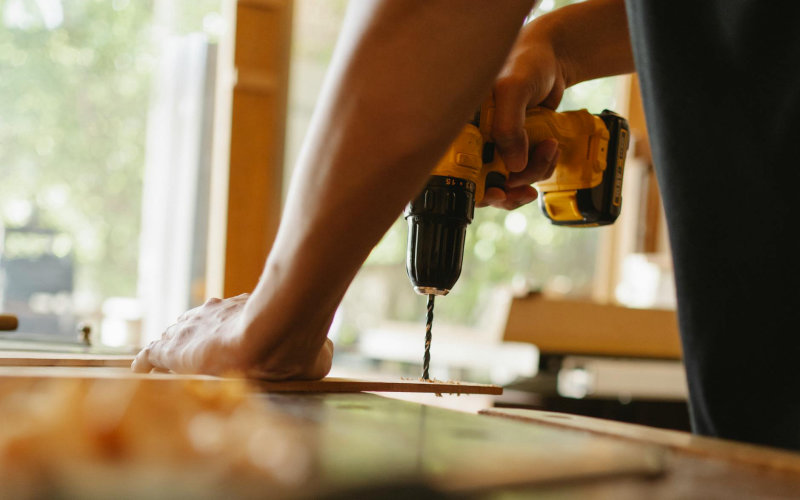

I still remember the first time I picked up a circular saw. I was 23, throwing together a raised garden bed out back, convinced that a solid YouTube binge had prepared me for the job. Turns out it had—just not in the way I hoped. I botched the cut, the blade seized up, and I nearly dropped the whole thing on my foot. Board went in the trash. My confidence followed right behind it.
That was 2009. Since then I’ve built decks, framed walls, laid flooring, and personally demonstrated just about every power tool error a person can make. And the thing that gets me about most of these mistakes? They don’t announce themselves. No dramatic failure, no obvious warning. They just quietly, steadily destroy your work while you wonder what went wrong.
So here are nine beginner power tool mistakes I keep seeing—on job sites, in forums, in the comments of my own YouTube videos—and what to actually do instead.
1. Not Reading the Tool Manual (Yes, Really)
Go ahead and roll your eyes. I did too, once.
But here’s the thing: every tool has its own weird quirks, and you won’t know about them until either the manual tells you or something goes sideways. My DeWalt DWE7491RS table saw, for instance, has a blade-change procedure that is genuinely not obvious. I skipped those pages and ended up with a nicked finger and two ruined blades back in 2019. The manual? Twenty minutes, start to finish.
Read it once. You’ll find things you didn’t know the tool could even do.
2. Wrong Blade or Bit for the Material
This is the quiet project killer. A wood-cutting blade dragged through fiber cement. A metal drill bit chewing into hardwood. It feels like it’s working—right up until the finish looks like garbage or your tool starts smelling hot.
Simple rule: match your cutting edge to the material, every time. Forty-tooth blade for finish cuts on hardwood. Demo blade for rough framing. Masonry bit for concrete—not whatever twist drill happens to already be loaded in the chuck.
Back in 2022, Fine Homebuilding ran a whole piece on router tearout because so many readers were grabbing multi-purpose bits when they needed upcut spiral bits. And it’s not just a quality issue. The wrong bit can catch, and when it does, it throws the workpiece.
3. Skipping the Measurement Double-Check
“Measure twice, cut once.” You know it. You ignore it when you’re rushing. We all do.
But what nobody mentions is that a wrong measurement doesn’t just waste a board—it cascades. Cut one stud an inch short on a partition wall and suddenly the whole top plate needs to come down. I lost an entire Saturday once over the difference between 7 feet 3 inches and 7 feet 3 and 3/8 inches on a staircase. One misread. Four hours of rework.
And mark your cuts with a sharp pencil, not a fat Sharpie. That thick line alone can eat 1/16 of an inch of precision right out from under you.
4. Letting the Guard Do Nothing
Blade guards exist for a reason—but beginners tend to land in one of two camps. They either pull the guard off entirely (bad idea), or they leave it on and never check whether it actually works.
Before every cut, make sure your guard moves freely and snaps back like it’s supposed to. A stuck guard can interfere with how the blade exits the material, which causes binding, which causes kickback. Kickback on a table saw throws wood at around 120 mph. That’s not a figure of speech.
And don’t defeat your tool’s safety features. Not once. Not “just this one cut.”
5. Gripping Too Hard (Or Too Loose)
I know. Your instinct says a tighter grip means more control. It doesn’t.
White-knuckling a jigsaw pumps vibration fatigue straight into your hand, and those micro-wobbles show up right there in the cut line. You end up fighting the tool rather than guiding it. Think steering wheel on a quiet highway—not white-knuckled, but not dangling either.
Too loose is obviously worse. A drill that slips off a screw and gashes your cabinet face. A sander that drifts right off your edge. There’s a middle ground, and it takes a few sessions to find it.
6. Not Clamping Your Workpiece
This one gets people hurt. And it creates finish problems that are genuinely maddening to trace back later.
Hold a board with one hand and drill with the other, and you’re one caught bit away from a spinning board. At a community workshop in 2021, I watched a guy catch a bit in a 2×4 and have it rotate a full 180 degrees and crack him in the forearm. Nothing broken, but it was close.
Clamp your work. Every time. F-clamps are eight bucks at Harbor Freight. There’s no excuse.
7. Running at the Wrong Speed
Most beginners just run everything at full throttle. Always. And honestly, that’s wrong more often than they’d think.
Drilling into metal needs slow speeds—around 300 to 500 RPM for a 1/4-inch bit in steel—or you’ll burn the bit and work-harden the metal underneath it. Drive screws into soft pine at max speed and you’ll strip the head in about half a second. Sand at high speed when you should be at medium and you’re just creating swirl marks you’ll spend an hour chasing.
The speed recommendations are in that manual. The one you’re not reading.
8. Ignoring Dust and Debris Management
This one’s sneaky because the damage accumulates slowly. Sawdust in the motor vents causes overheating. Fine dust in your lungs causes respiratory damage that doesn’t show up for years—sometimes decades.
The CDC reported in 2020 that woodworkers face significantly elevated rates of nasal cancer compared to the general population, driven largely by long-term wood dust exposure. That’s a grim number to sit with for a minute.
So: N95 mask, minimum. Hook your tools to a shop vac when you can. Hit the motor vents with compressed air once a month. None of this is complicated. It’s just easy to skip.
9. Forcing a Stalled Tool
Tool stalls. You lean into it. Wrong move.
When a router bit catches or a saw blade binds, the right response is to release the trigger immediately and carefully back the tool out. Forcing through it bogs the motor, risks stripping gears, and with a circular saw specifically, can trigger violent kickback.
If your tool is stalling out regularly, the culprit is almost always a wrong blade or bit (see mistake #2), a dull cutting edge, or a feed rate that’s just too aggressive. Slow down. Let the tool cut.
Bottom Line
Here’s something I don’t see written often enough: most beginner power tool mistakes aren’t really about missing skills. They’re about misplaced confidence. The genuinely dangerous beginner isn’t the nervous one asking questions—it’s the one who’s done something twice and decided they’ve got it handled. That’s when the speed chart stops getting checked. The clamp doesn’t come out. The double-check feels unnecessary. Real competence looks a lot like stubborn, repetitive caution. Build those habits first, and the skill just follows.
Frequently Asked Questions
What are the most common beginner power tool mistakes to avoid?
The big ones are using the wrong blade for your material, skipping workpiece clamping, and running tools at the wrong speed. Any one of them can wreck a project or put you in the ER.
Do I really need to read the tool manual?
Yes—especially for table saws, routers, and miter saws. Every model has its own quirks, and the manual covers safety features you genuinely might not find any other way.
How do I know what speed to run my drill or saw?
Start with the manual. For metal, go slow—under 500 RPM for small bits. For wood, faster is usually fine. Most drills have a torque clutch setting specifically for driving screws; use it instead of guessing.
Is a dust mask actually necessary for occasional woodworking?
Yes. Wood dust—especially from MDF and pressure-treated lumber—is hazardous even in small doses over time. An N95 respirator runs about $2 a mask. Easy trade.
Photo by Ono Kosuki on Pexels

