

Last spring, I spent two hours on my living room windows. Stood back, sunlight caught the glass just right, and they looked worse than before I’d started. Streaks absolutely everywhere. Maddening doesn’t quite cover it.
That was the day something clicked. I stopped treating window cleaning like a vague chore you just muddle through and actually figured out what works. Turns out there’s a real method here—and once you’ve got it, the whole job takes maybe 30 minutes per room. But getting it wrong? That’s responsible for roughly 90% of the frustration people feel about this particular chore.
So here’s what I’ve learned, tested, and occasionally botched over years of home improvement obsession.
The One Thing Most People Do Wrong From the Start
Timing. Nearly everyone cleans windows on a sunny Saturday afternoon—nice day, high motivation, great visibility. Makes total sense. But sunlight heats the glass and dries your cleaning solution before you can wipe it off, and that’s literally how streaks happen. Clean on a cloudy day instead, or at least start with whichever windows are sitting in shade.
That single change fixed most of my streaking problems. Just that. Overcast sky. Done.
What You Actually Need (Keep It Simple)
You don’t need a cart full of specialty products. Honestly, the best window cleaner I’ve found costs almost nothing: one part white vinegar, two parts water, spray bottle. That’s it. Cuts through grease, mineral deposits, and general grime without leaving residue behind.
If you’d rather grab something off a shelf, Windex still holds up fine. Zep Glass Cleaner is another solid pick—less talked about than Windex, but genuinely excellent for heavier buildup.
Tools matter more than most people realize, though.
Microfiber cloths are non-negotiable for interior windows. They grab residue without depositing lint, and they won’t scratch. For exterior glass, you want a rubber-bladed squeegee with a sturdy handle you can actually control. Skip the dollar-store version—a decent squeegee from any hardware store runs $8 to $15 and will last you years.
How to Clean the Inside of Windows (Step by Step)
First things first: lay a towel on the windowsill or floor below the glass. You will drip. Just accept it.
Mix a few drops of dish soap into warm water in a bucket, dip a microfiber cloth or sponge, and wipe down the entire glass surface from top to bottom. Don’t skip the frame either—frames collect dust and mold that eventually migrates right back onto the glass.
Next, spray your vinegar-water solution across the pane and wipe it dry using a clean, lint-free cloth in a Z-shaped pattern. Not circles. Z-shaped. Circles just push grime around; the Z motion actually carries it off the surface. Still seeing streaks? Spray again, wipe again. Two rounds handles even pretty grimy windows.
And for genuinely stubborn spots—dried paint, old tape marks, sticky mystery residue—try a plastic razor scraper held at roughly a 45-degree angle. It sounds alarming but won’t scratch the glass if you keep it wet and maintain that angle.
How to Clean Outside Windows the Right Way
Exterior windows are a different animal entirely. They catch bird droppings, oxidized pollen, hard water spray from sprinklers, UV-baked grime that interior glass never has to deal with.
Start by rinsing with a garden hose—just blast the surface to knock the big stuff loose before you even touch it. Then mix dish soap into a bucket of cool water (not warm; warm evaporates too fast outdoors) and wash the glass with a soft microfiber cloth or a sponge mop on a pole for anything above comfortable arm’s reach.
Rinse again. Then apply your vinegar solution or commercial cleaner.
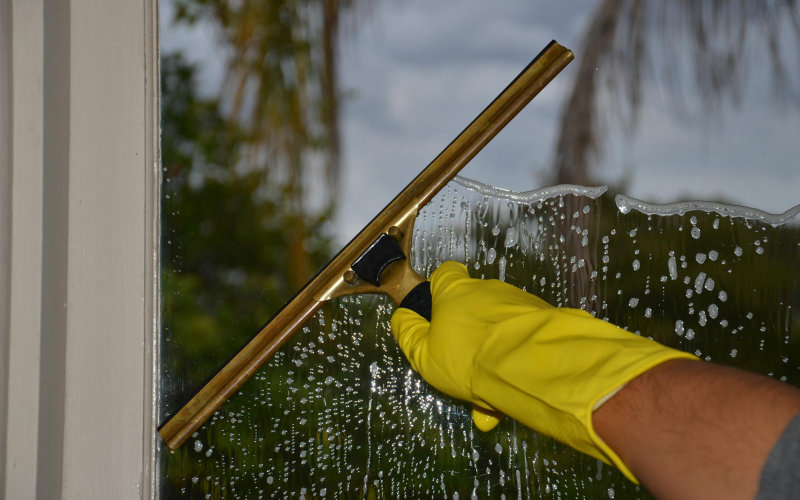
Now grab the squeegee. Start at the top corner, angle it slightly downward, and pull across in overlapping horizontal strokes. After each pass, wipe the blade with a dry cloth—this part is critical. A wet squeegee blade just redistributes water right back onto the glass. Wipe it every single time.
For second-floor windows or higher, a telescoping window washer pole is genuinely life-changing. (I almost wrote “game-changer” there—you’re welcome.) I picked one up around 2021 for about $30 and have used it probably 40 times since. Beats leaning out a window or hauling out a ladder for routine cleaning by a wide margin.
Dealing With Hard Water Stains and Mineral Deposits
If you’re in a hard water area—and roughly 85% of American homes are, according to the U.S. Geological Survey—you already know those cloudy white spots that vinegar alone won’t budge. That’s calcium and lime buildup.
CLR Calcium, Lime & Rust Remover is what I reach for when things get that bad. Follow the label directions carefully; it’s strong stuff and you don’t want it sitting on glass too long. For milder cases, straight undiluted white vinegar soaked in for five minutes before wiping will sometimes do the trick.
But don’t use steel wool. Ever. Not even a little bit.
Don’t Forget the Screens
Screens are the part everyone skips, then they wonder why their freshly cleaned windows still look faintly hazy from inside. You’re literally looking through the screen. Clean the screen.
Pop them out, rinse with the hose, spray with vinegar solution, rinse again, and let them dry completely before reinstalling. Maybe five minutes per screen. The difference is immediately visible.
How Often Should You Actually Do This?
Interior windows every one to two months is reasonable for most households—more often if you’ve got kids, dogs, or anyone who breathes directly on the glass. (Dogs. It’s always the dogs.)
Exterior windows twice a year minimum: once in spring after pollen season wraps up, once in fall before the weather turns. Live near a construction zone, busy road, or the ocean? Bump that to four times a year.
Bottom Line
Here’s something nobody really tells you: how clean your windows are directly affects how big your rooms feel. Not metaphorically—clean glass lets in measurably more natural light, and natural light makes spaces read as larger and airier than they actually are. Real estate photographers know this cold. They always clean the windows before a shoot, not just for appearances but because it genuinely transforms every photo.
So if your rooms feel smaller or darker than you’d like, clean the windows before you repaint, rearrange furniture, or spend money on new lighting. It’s the cheapest renovation you’ll ever pull off.
Frequently Asked Questions
Why do my windows still have streaks after cleaning?
Most likely you cleaned on a sunny day and the solution dried before you could wipe it, or you used too much soap. Use less product than you think you need, work in shade or on an overcast day, and dry with a genuinely clean microfiber cloth—one with no leftover residue from previous uses.
Is vinegar safe to use on all window types?
White vinegar is fine on standard glass. But avoid it on windows with special coatings—some tinted or UV-protective films can degrade under prolonged acid exposure. When you’re unsure, check the manufacturer’s care guidelines or just use mild soap and water instead.
Can I use newspaper to dry windows?
Old newspaper used to work well because the ink absorbed moisture without leaving lint. But modern newspaper ink is different—it can smear and leave its own residue. Microfiber cloths are just the better call these days.
How do I clean windows I can’t safely reach?
A telescoping extension pole with a microfiber mop head or squeegee attachment handles most two-story windows without drama. For anything higher than about 20 feet, I’d genuinely recommend hiring a professional window cleaning service rather than gambling with a ladder fall.
Photo by Blissful Place Cleaning company in Perth on Pexels

