
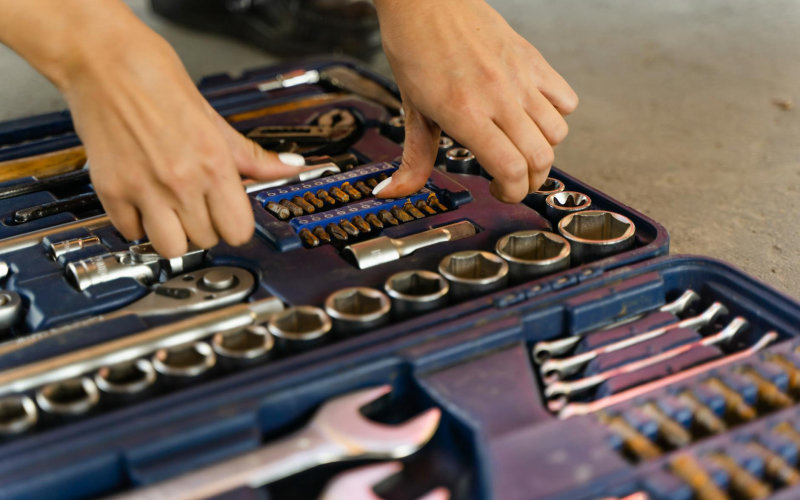

I’ve lived in four different houses over the past 14 years. Three of them had that moment — you know the one — where something breaks on a Sunday afternoon and you’re standing there with zero tools and absolutely nowhere to turn. The fourth house had a proper kit sitting in the closet, and honestly? I can’t overstate what a difference that made.
Here’s the truth: most people buy tool kits wrong. They either grab the cheapest thing on the shelf (and regret it instantly when the screwdriver strips on the second screw) or they go completely overboard on a 300-piece set when 40 solid tools would’ve done the job. So let me walk you through what I actually found after hands-on time with several of the most popular kits out there.
This isn’t Amazon star ratings repackaged as advice. I want to help you figure out which kit fits your actual situation — whether you just moved into your first apartment, you’re a weekend DIYer getting more serious, or you’re somewhere in the middle.
What to Actually Look for in a Home Tool Kit
Weight, piece count, price. Those are the three things people compare first. They’re also the three least useful metrics on their own.
What matters more is tool quality at each size. A lot of budget kits sneak in undersized hammers — 8-ounce craft hammers dressed up as real tools — that fold the moment you try driving anything heavier than a picture hook. You need a full 16-ounce hammer if you want to get anything done. Same logic applies to pliers and screwdrivers. Full-grip handles, not miniature toy versions.
Storage design is something people consistently underestimate. A molded plastic case with labeled slots means you’ll actually put tools back where they belong. A zippered bag means everything gets dumped in, and six months later you’re digging around like you lost your car keys. I have strong opinions about this.
Best Overall: Stanley 94-248 65-Piece Homeowner’s Tool Kit
Around $60. Seriously. And it punches well above that price.
I tested this kit on a real project — not just opening boxes and wiggling handles — and the hammer stood out immediately. Full size. I drove 8D framing nails into a 2×4 without any drama, which I genuinely couldn’t say about the undersized hammers that ship with cheaper sets. The pliers, screwdrivers, and utility knife are all full-size too, with rubberized grips that don’t slip even after 30 minutes of continuous use.
The 65 pieces break down into flathead and Phillips screwdrivers, two pairs of pliers, that hammer, a tape measure, a level, a utility knife, 30 screwdriver bits, 10 hex keys, and eight ratchet attachments. Comprehensive? No. But it covers roughly 80% of the jobs you’ll actually tackle at home.
One real complaint: the tape measure feels noticeably cheaper than everything else in the case. And eight socket sizes is thin if you ever work on anything mechanical. But as a general home kit? This is the one I’d hand to almost anyone.
Best Budget Pick: Apollo Tools DT9706 39-Piece Set
Thirty bucks. That’s it.
The Apollo Tools DT9706 doesn’t pretend to be something it isn’t, which I genuinely respect. It’s 39 pieces in a compact molded case that actually fits inside a kitchen drawer — perfect for apartments or anyone who needs a first kit without committing to a big box of gear. The screwdriver handles feel surprisingly decent (not premium, but not painful either), and the utility scissors cut through thick cardboard cleanly. That matters more than you’d think when you’re assembling flat-pack furniture at 11pm.
So if you’re a renter who needs to hang shelves, tighten loose cabinet hinges, and handle minor fixes without calling your landlord, this is entirely sufficient.
Best for New Homeowners: Black+Decker LDX120PK 68-Piece Kit
This one comes with a 20V cordless drill. That changes the math significantly.
Once you own a home, you will need a drill. It’s not optional. The LDX120PK bundles a genuine Black+Decker 20V drill with a solid 68-piece hand tool set, all stored in a carry bag. Yes, the bag isn’t as organized as a molded case — that’s a real tradeoff. But getting a functional cordless drill included at that price point is genuinely hard to beat if you’re starting from absolute zero.
Best for Serious DIYers: Crescent 180-Piece SAE/Metric Set
This is where things get serious.
The Crescent 180-piece set covers both SAE and metric sizing, meaning it handles home projects AND basic automotive work. If your garage is starting to look like an actual workshop, or you’ve gotten confident enough to tackle outlet replacements, fixture installs, or your own brake pads — this is the kit that grows with you instead of holding you back.
Best Complete Kit: WorkPro 322-Piece Home Tool Set
322 pieces sounds like overkill. For most people, it probably is.
But here’s who it’s genuinely perfect for: someone who hates making multiple purchases, wants one solution covering everything from basic repairs to moderate mechanical work, and doesn’t mind dedicating drawer or closet space to a full carry bag. At around $65-80, the per-tool cost is almost absurdly low. Quality is what you’d expect at that price — solid but not premium — though the coverage is impressive.
How to Actually Maintain Your Kit (Nobody Talks About This)
Buying the kit is step one. Step two is not letting it become a chaos drawer within a year.
My system: after any project, I spend three minutes wiping tools down before putting them back. Metal tools rust faster than people expect, especially in garages or basements with humidity swings. A quick wipe with a dry cloth — occasionally a drop of machine oil on moving parts like pliers — extends tool life dramatically. I’ve had the same Stanley pliers since 2015 and they still work perfectly.
And buy a label maker. Seriously. Label every slot in your molded case. Sounds fussy until the second time you find a random tool just lying on your workbench because it “didn’t have a home.”
Bottom Line
Here’s something nobody says clearly enough: the right home tool kit isn’t about piece count — it’s about whether the tools inside are full-sized and functional for real work. Most people buy kits, discover the tools are miniature versions of actual tools, get frustrated, and either upgrade immediately or abandon DIY altogether. That’s a waste of both money and confidence. Buy one kit with fewer tools that are legitimately full-size and you’ll use them for 10+ years. Buy a 200-piece set full of toy-sized wrenches and you’ll be back on Amazon in six months.
My actual recommendation: start with the Stanley 94-248 for the best overall value, bump to the Black+Decker LDX120PK if you just moved into your first house and need a drill, and don’t touch the 300+ piece sets until you’ve genuinely outgrown something smaller. That’s the honest progression.
Frequently Asked Questions
How many pieces should a good starter home tool kit have?
Honestly? Somewhere between 40 and 70 is the sweet spot for most people. That’s enough to handle the majority of household repairs without cluttering your space with tools you’ll never touch. Anything under 30 tends to feel limiting pretty quickly. Anything over 150 in a starter kit usually means a lot of the pieces are redundant accessories — not actual tools.
Are cheap home tool kits actually worth buying?
Depends on the brand and what’s inside. The Apollo Tools DT9706 at around $30 is genuinely worth buying for renters or light users. But truly bargain-bin kits from no-name brands often include tools with soft metal heads that strip and snap — costing you more in frustration and replacements than spending an extra $20 upfront would have.
What’s the most important tool to have in any home kit?
A screwdriver set with multiple bit types. Full stop. More home repairs involve a screwdriver than any other tool by a wide margin — from tightening hinges to assembling furniture to replacing outlet covers. If your kit has one great screwdriver with a solid set of interchangeable bits, you’re already halfway through most jobs that come up in a typical year.
Should I get a kit with a power drill included?
If you own a home, yes. Absolutely. If you rent and mostly deal with light fixes, probably not yet — a hand tool kit is enough. But drilling comes up in so many home improvement projects that having even a basic 20V cordless drill significantly changes what you’re capable of doing on your own.
Photo by Anastasia Shuraeva on Pexels

